Agricultural & ranch fencing
A fence on a farm or ranch must do more than mark a property line. It may need to contain animals, divide pastures, protect equipment, control vehicle access, create a safe working area, or provide a finished entrance to the property.
Planned around your land, animals and daily operations
Modern Fence Company installs agricultural and ranch fencing throughout Fort Smith, Western Arkansas, and Eastern Oklahoma. We work with rural homeowners, farmers, ranchers, estate owners, property managers, builders, and other customers who need fencing across larger or more demanding properties.
Agricultural and ranch fence projects may include
- Farm perimeter fencing
- Ranch fencing
- Livestock fencing
- Pasture divisions
- Horse property fencing
- Cattle-area fencing
- Estate-style rail fencing
- Rural residential fencing
- Barn and equipment enclosures
- Custom ranch entrances
- Manual vehicle gates
- Automatic gates
- Controlled-access entrances
- Fence repair and replacement
We do not recommend one fence for every farm or ranch. We look at what needs to remain inside the property, what needs to remain outside, and how people, animals, trucks, trailers, and equipment move across the land.
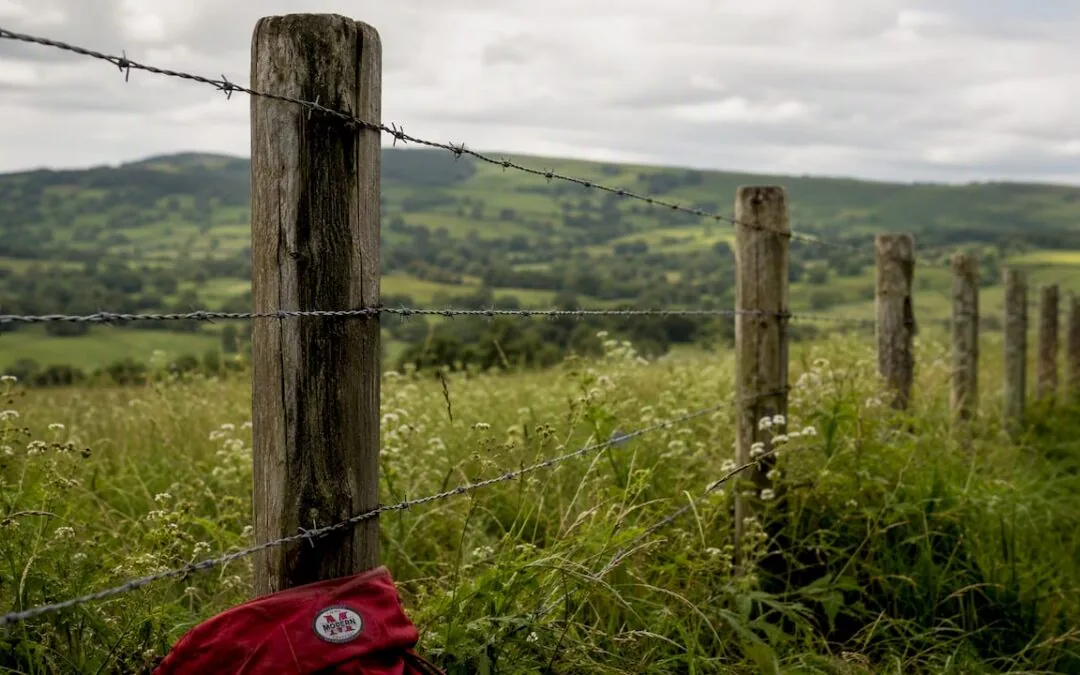
Two rural properties can look alike and need different fences
A small horse property may need safe pasture divisions and several easy-to-use gates. A working farm may need vehicle access, equipment areas, and long fence runs. A large estate may want an open rail fence near the home with a custom automatic entrance at the road.
A poorly placed gate or narrow opening can create problems every day. A fence selected without considering the animals may not provide dependable containment. A system built without accounting for rock, drainage, or steep ground may also require early repairs.
Before recommending a system, we consider
- Property size
- Fence purpose
- Type and size of animals
- Number of pastures or enclosures
- Vehicle and trailer access
- Daily traffic patterns
- Barns and equipment areas
- Terrain and slopes
- Mountain rock
- Expansive clay
- Drainage
- Existing fence conditions
- Security concerns
- Road frontage
- Gate locations
- Future property plans
The main boundary around the property
Perimeter fencing establishes the main boundary around a farm or rural property. It may be used to:
- Define property lines
- Contain livestock
- Limit unwanted entry
- Separate the property from a roadway
- Protect fields and equipment
- Direct vehicles toward approved entrances
- Connect several pasture or enclosure areas
- Improve the appearance of the property
Long fence runs require careful planning. Changes in elevation, wooded areas, creeks, drainage paths, rock, roads, and existing structures may affect the fence line. The planned route should also allow reasonable access for installation and future maintenance.
Different parts of the same ranch, different systems
Ranch fencing may need to balance animal containment, equipment access, appearance, and long-term maintenance. A ranch project may include:
- Boundary fencing
- Pasture divisions
- Holding areas
- Barn enclosures
- Equipment yards
- Residential yard fencing
- Estate-style fencing
- Secondary access points
- Custom ranch gates
- Automatic entrance gates
The fence near the road or home may have a more finished appearance than fencing in working areas of the property.
Selected around the animals that will use it
A fence that works for one type of animal may not be appropriate for another. Tell us how each section of the property will be used so we can plan the layout around the actual operation.
Important factors may include
- Animal size
- Animal strength
- Herd size
- Temperament
- Pressure placed on the fence
- Ability to jump or climb
- Visibility of the fence
- Bottom clearance
- Gate security
- Pasture layout
- Feed and watering areas
- Vehicle access
Cattle and large-livestock areas
Fencing around cattle and other large livestock may experience more pressure than a decorative residential fence. Planning may need to account for:
- Animal strength
- Herd movement
- Feeding areas
- Water access
- Barn entrances
- Holding areas
- Loading areas
- Heavy equipment
- Wide vehicle gates
- Roadside boundaries
Posts, bracing, gates, and transitions between fence sections are especially important in higher-pressure areas.
The project should also consider how animals are moved between pastures, barns, holding areas, and loading points. The final specifications should match how the enclosure will be used rather than relying only on the total fence length.
Visibility, openings and the way horses move
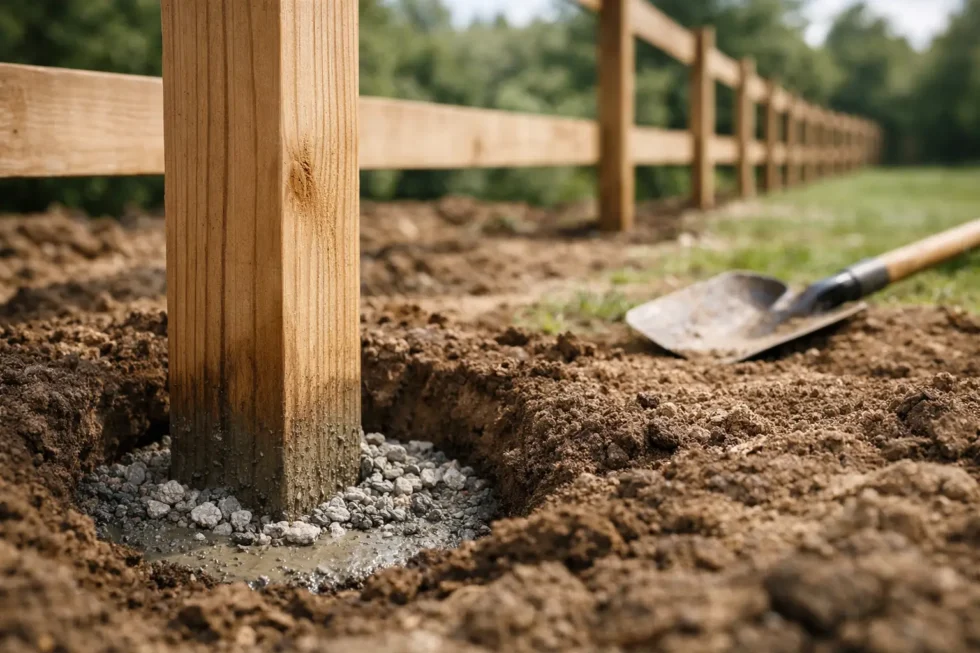
Horse fencing requires careful attention to visibility, openings, gates, and the way horses move through the property.
The layout may include
- Pasture boundaries
- Paddocks
- Barn areas
- Riding areas
- Exercise enclosures
- Equipment areas
- Driveways
- Service entrances
- Separate residential fencing
Gate openings should provide enough room for horses, handlers, mowers, tractors, and trailers. Sharp edges, loose materials, poorly placed hardware, and difficult corners should be considered during planning.
Interior fencing divides the working property
Interior fencing can divide a large property into smaller pastures or working areas.
Gate placement is a major part of pasture planning. A gate should support the normal movement of animals, people, and equipment without creating unnecessary bottlenecks.
Pasture divisions may help property owners
- Separate animals
- Control access to selected land
- Rotate the use of different areas
- Protect wet or damaged ground
- Create holding areas
- Separate livestock from equipment
- Direct movement toward barns or gates
- Keep animals away from roads or homes
Not every rural fence is for containment
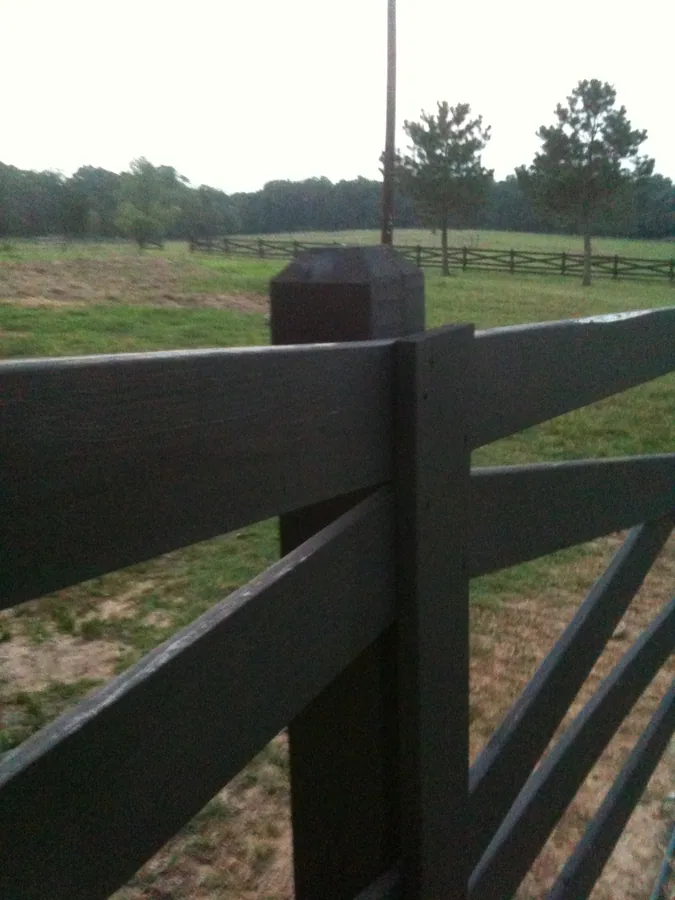
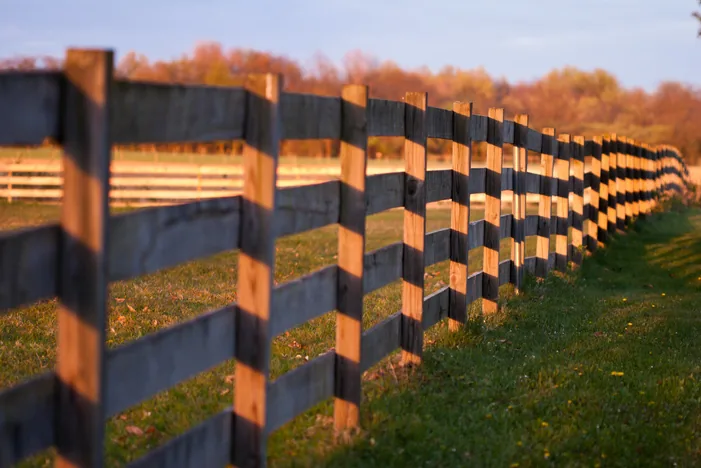
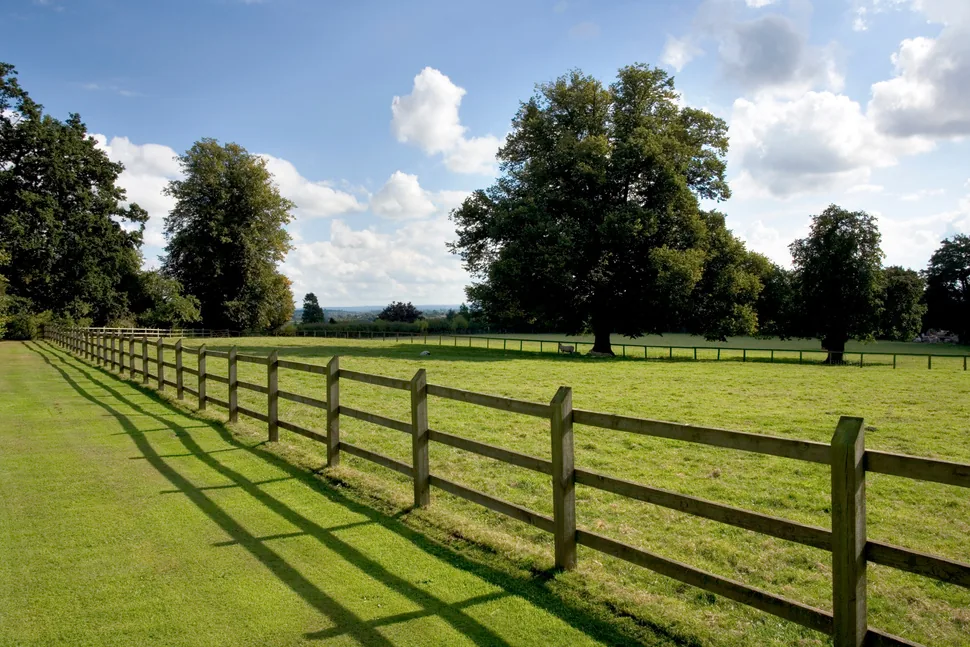
Estate-style rail fencing can create an open, finished boundary around:
- Rural homes
- Large residential lots
- Estates
- Ranch entrances
- Driveways
- Front property lines
- Landscaped areas
- Road frontage
Wood fence layouts may include
- Two-rail estate fencing
- Three-rail estate fencing
- Four-rail estate fencing
- Custom post-and-rail layouts
- Matching walk gates
- Matching vehicle gates
- Wood and metal gate combinations
Additional containment material may be needed when the fence must hold smaller animals. The visible rail system and the containment system should be planned together.
Security around barns, shops and storage
Chain link fencing may be used in selected areas of a farm, ranch, or rural residential property. It can provide practical security around:
- Barns
- Equipment areas
- Workshops
- Storage yards
- Residential backyards
- Dog enclosures
- Gardens
- Utility equipment
- Fuel or supply areas
- Controlled work zones
Available options may include galvanized chain link, black-coated chain link, different heights, privacy slats, walk gates, and vehicle gates. Chain link can also be connected to another fence type where a stronger or more secure enclosure is needed near a building.
A gate here may be used many times a day
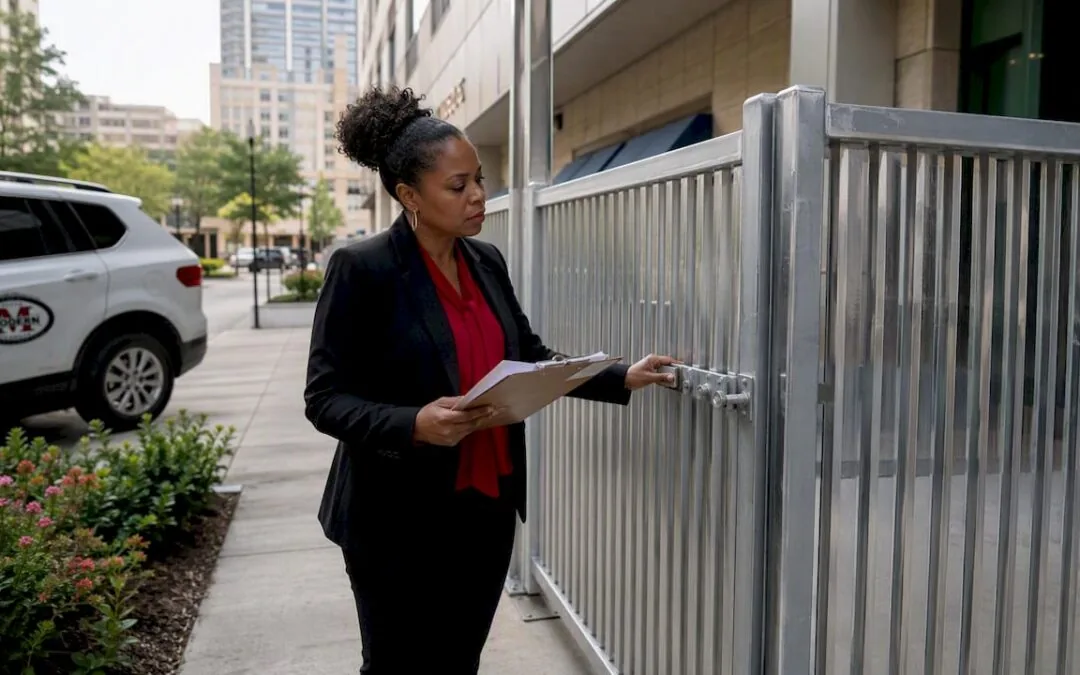
It must fit the opening, support its weight, clear the ground, and allow the required vehicles, equipment, or animals to pass through safely. Modern Fence Company provides custom gate fabrication through our own metal shop.
Ranch gate options
- Walk gates
- Pasture gates
- Double-swing gates
- Wide vehicle gates
- Sliding gates
- Cantilever gates
- Custom hillside gates
- Ranch entrances
- Estate gates
- Automatic gates
- Controlled-access gates
Planning gate width
Consider the largest item that may need to pass through the opening:
- Pickup trucks
- Stock trailers
- Horse trailers
- Tractors
- Mowers
- Hay equipment
- Delivery vehicles
- Construction equipment
- Emergency vehicles
- Utility vehicles
The approach angle and turning space matter in addition to the measured width of the vehicle.
Gates on hills and uneven ground
A standard square gate may not work correctly on a steep or uneven opening. The gate may:
- Drag against the ground
- Leave a large opening underneath
- Fail to open fully
- Swing downhill unexpectedly
- Place extra stress on the hinges
- Require more clearance than expected
We review the grade and plan the gate frame, support posts, swing direction, and bottom clearance around the actual property.
Security and a finished entry to the property
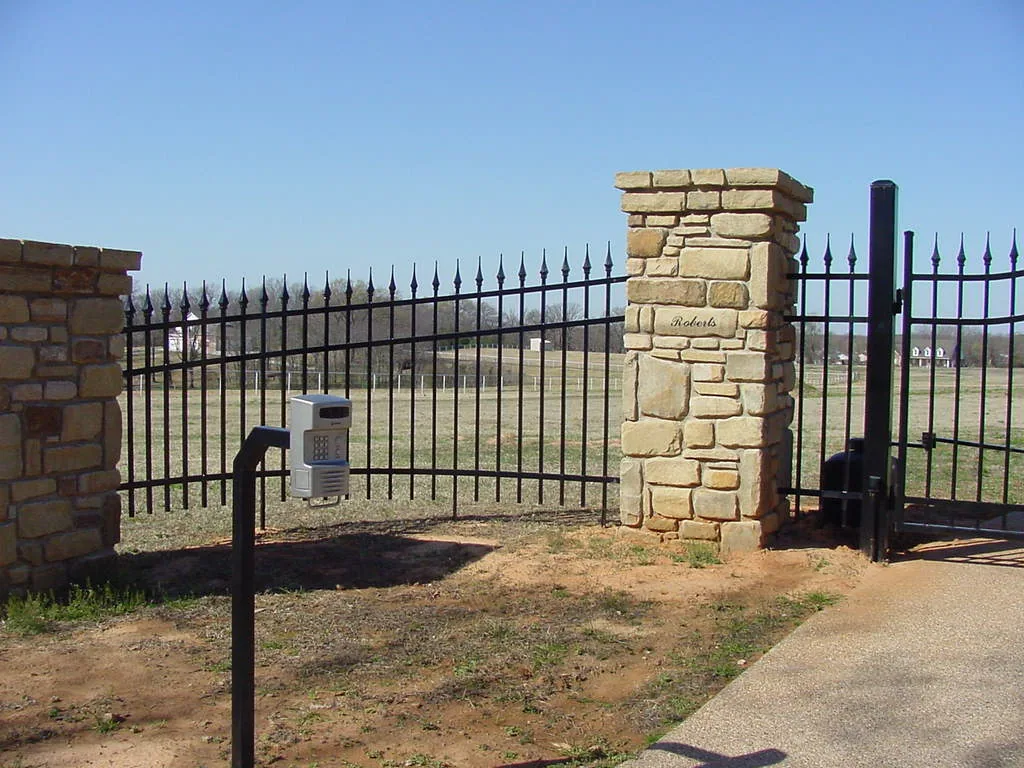
A ranch entrance can provide security while creating a clear and finished entry to the property.
Entrance projects may include
- Custom steel gates
- Ornamental iron gates
- Wood and steel gate combinations
- Single-swing gates
- Double-swing gates
- Sliding gates
- Cantilever gates
- Support posts
- Columns
- Address features
- Automatic operators
- Keypads
- Telephone entry
- Intercom systems
- Camera integration
- Solar-powered equipment
The entrance should be planned around normal traffic, visitors, deliveries, trailers, and emergency access.
Our agricultural fence installation process
1
Initial project discussion
Tell us where the property is, how many acres or areas are involved, what the fence needs to accomplish, what animals use the property, the approximate length, gate needs, terrain concerns and timing.
2
Property review
A salesperson reviews fence lines, terrain, access, existing fencing, gates, barns and structures, roads and driveways, drainage, known utilities, animal movement and equipment access.
3
Layout and system planning
We discuss fence type, materials, post spacing, gate locations and widths, pasture divisions, entrance systems, custom fabrication, access control and existing fence removal.
4
Written proposal
We prepare a proposal based on the selected scope, materials, layout, gates, and work included.
5
Approval and deposit
After the proposal and required deposit are received, the project is prepared for scheduling.
6
Material ordering and fabrication
Materials are ordered, and custom gates or entrance components are planned through our fabrication shop.
7
Layout and post installation
The crew reviews the work order, lays out the fence, and installs corner posts, gate posts, and line posts.
8
Fence installation
Rails, wire, chain link, boards, or other approved components are installed according to the project specifications.
9
Gate and access control
Manual gates, automatic gates, operators, keypads, or other selected equipment are installed and adjusted.
10
Cleanup and final review
Project debris is removed from the active work area. A crew supervisor or salesperson reviews the completed work.
No general price per foot for a farm
Modern Fence Company does not use one general price per foot for every agricultural project.
A useful proposal should explain the materials, layout, gates, removal, fabrication, and work included.
The final project scope may be affected by
- Total fence length
- Number of separate areas
- Fence type
- Material specifications
- Number of posts
- Post spacing
- Bracing
- Terrain
- Rock
- Expansive clay
- Drainage
- Wooded areas
- Existing fence removal
- Number and width of gates
- Custom gate fabrication
- Automatic gate equipment
- Access-control equipment
- Material delivery
- Crew and equipment access
- Travel distance
- Permits
- Engineering or special approval
Built for larger properties and longer fence runs
- 01
Serving the region since 1950
More than 75 years of experience with residential, agricultural, commercial, and industrial fence projects.
- 02
Employee installation crews
Our fence installations are completed by Modern Fence Company employees rather than unknown subcontracted crews.
- 03
In-house gate fabrication
We fabricate custom ranch, estate, vehicle, sliding, and hillside gates in our own shop.
- 04
Fence, gate and access control
We can coordinate the fence, entrance gate, operator, and access-control system within one project.
- 05
Experience with large properties
Our crew capacity allows us to handle larger fence runs and projects with several gates or separate work areas.
- 06
Licensed and insured
Modern Fence Company carries licensing, general liability insurance, and workers’ compensation coverage for the work we perform.
- 07
Workmanship warranty
Installations include a one-year workmanship warranty for qualifying labor issues caused by our work. Damage from animals, vehicles, equipment, storms, falling trees, soil movement or misuse is not automatically covered. Review our warranty information.
Farm and ranch fencing across
Western Arkansas & Eastern Oklahoma
Modern Fence Company provides farm and ranch fencing throughout:
We also serve rural properties throughout Sebastian, Crawford, Franklin, Logan, Scott, Le Flore, Sequoyah and Haskell counties. Larger projects may be accepted farther from our Fort Smith office. Travel charges may apply outside our primary service area.
Rail fencing, ranch gates and rural entrances
Visit our project gallery to see completed agricultural fences, estate rail fencing, chain link enclosures, custom ranch gates, automatic entrances, and rural property projects. You can also read customer reviews from property owners who have worked with Modern Fence Company.
Agricultural and ranch fencing questions
Visit our fencing and access control FAQ for more answers.
What type of fence is best for a farm or ranch?
The right system depends on the animals, acreage, terrain, security needs, gates, maintenance expectations, and how the property is used.
Do you install livestock fencing?
Yes. We plan agricultural fencing around the type of animals, enclosure size, pressure on the fence, gates, and daily property operations.
Do you install fencing for horse properties?
Yes. Horse property projects may include pasture boundaries, paddocks, barn areas, estate fencing, and custom gates.
Can you fence a large rural property?
Yes. Project scheduling and specifications depend on the total fence length, terrain, materials, access, gates, and current workload.
Do you install estate-style rail fencing?
Yes. Available wood layouts may include two-rail, three-rail, four-rail, and custom estate fence designs.
Can chain link be used on a farm or ranch?
Yes. Chain link may work well around barns, workshops, equipment yards, dog enclosures, gardens, utility areas, and secure storage areas.
Can you build wide gates for trucks and trailers?
Yes. We fabricate custom vehicle gates based on the opening, grade, equipment, and expected use.
Can you build a gate on a hillside?
Yes. The opening must be measured and designed around the grade. A custom hillside gate may be needed.
Do you install automatic ranch gates?
Yes. A ranch entrance may include automatic operators, keypads, telephone entry, intercom systems, camera integration and solar-powered equipment, coordinated with the fence and gate in one project.
A fence that supports the way the property operates
A farm or ranch fence should support the way your property operates every day. Our team will review the property needs and help plan a fence, gate, and entrance system built around the land.
Tell us
- Where the property is located
- The approximate fence length
- How the land is used
- What animals need to be contained
- How many separate areas are needed
- The type of fence you are considering
- The number and width of gates
- The largest vehicles or equipment using the gates
- Whether the property is steep or rocky
- Whether an automatic entrance is needed
- Whether access control is needed
- Whether existing fencing must be removed
- Your preferred project timing