
Custom gates
A gate is the moving part of a fence system. It must fit the opening, follow the grade, support its own weight, provide the needed clearance, and continue operating through regular use.
1950
In business since
75+
Years of fence projects
100%
Employee install crews
1 yr
Workmanship warranty
Designed around the property, the opening and daily use
Modern Fence Company designs, fabricates, installs, and repairs gates throughout Fort Smith, Western Arkansas, and Eastern Oklahoma.
We fabricate custom gates in our own shop rather than trying to force every property into a standard gate size — the frame, hinges, posts, rollers, hardware, ground clearance, and operating system are planned around the actual opening.
Our gate services include
- Residential walk gates
- Driveway gates
- Estate entrance gates
- Ranch gates
- Commercial vehicle gates
- Industrial gates
- Ornamental iron gates
- Chain link gates
- Steel-frame wood gates
- Swing gates
- Sliding gates
- Cantilever gates
- Custom hillside gates
- Manual gates
- Automatic gates
- Controlled-access entrances
- Replacement gates
- Gate repair
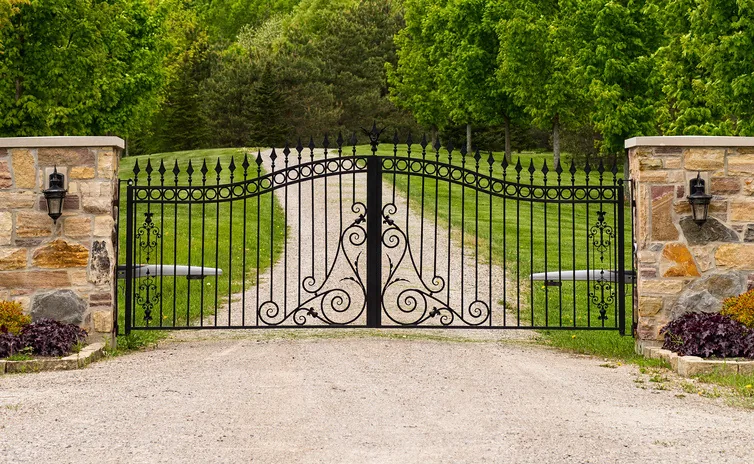
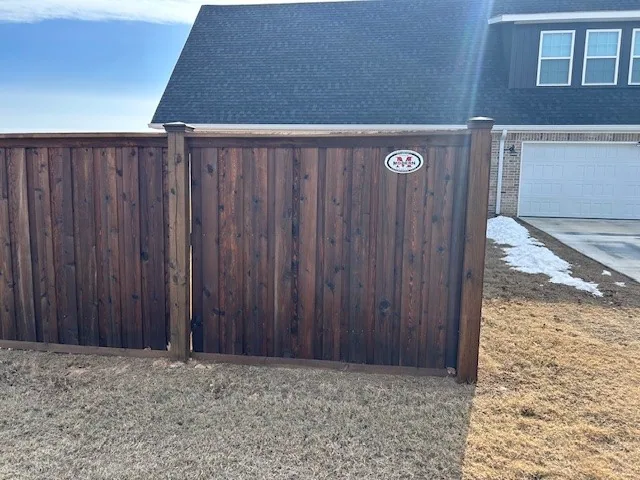
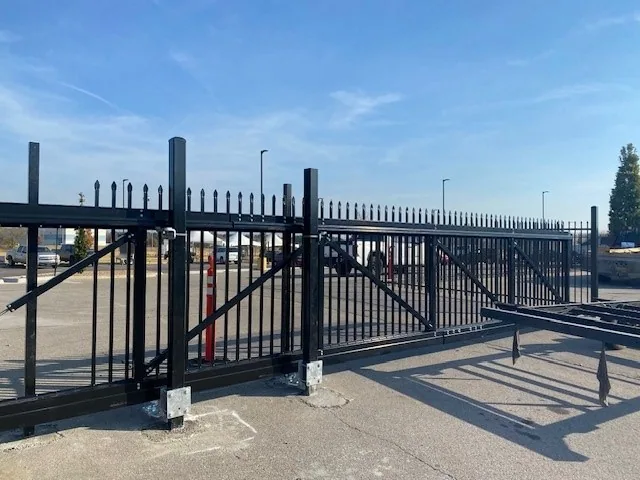
Gate systems by property type
A backyard walk gate may open a few times each day. An apartment entrance may cycle continuously. A warehouse gate may need to accommodate tractor-trailers, while a ranch entrance may need a wide opening that stays dependable in changing soil and weather.
Custom gate fabrication
Built around the opening, slope, columns, traffic and surrounding fence instead of a standard size.
Driveway gates
Vehicle access and a clear entrance, planned around how cars actually approach and turn.
Estate and ranch gates
Functional entrances that also read as property features, matched to the fence and landscape.
Commercial and industrial gates
Larger openings, heavier frames, more frequent use and demanding vehicle traffic.
Automatic gates
Operators, safety devices and entry equipment selected for the actual gate and cycle count.
Gate operators and access control
Keypads, cards, RFID, telephone entry and intercoms coordinated with the gate itself.
The correct gate depends on how the entrance will be used, not simply how wide the opening appears. We provide gate systems for homes, luxury residences, estates, farms and ranches, apartment communities, HOAs, offices, retail properties, warehouses, storage yards, industrial facilities, schools, churches, hotels, medical properties, municipal facilities and government properties.
Swing, sliding or cantilever
Swing gates
Appropriate where the property has enough open space for the panels to move. Planning should consider:
- Gate width
- Number of panels
- Swing direction
- Driveway slope
- Wind exposure
- Vehicle stacking
- Property lines
- Support posts
- Nearby structures
- Automatic operator requirements
A swing gate may not be the right choice when the driveway rises sharply behind the opening or when vehicles cannot wait clear of the road.
Sliding gates
They travel along the fence line rather than swinging into the property. They may work well when:
- Swing clearance is limited
- The entrance is wide
- Vehicle stacking space is important
- The property receives frequent traffic
- An automatic entrance is needed
- The layout provides sufficient travel space
The travel path must remain clear of parked vehicles, stored materials, landscaping, snow, debris and other structures.
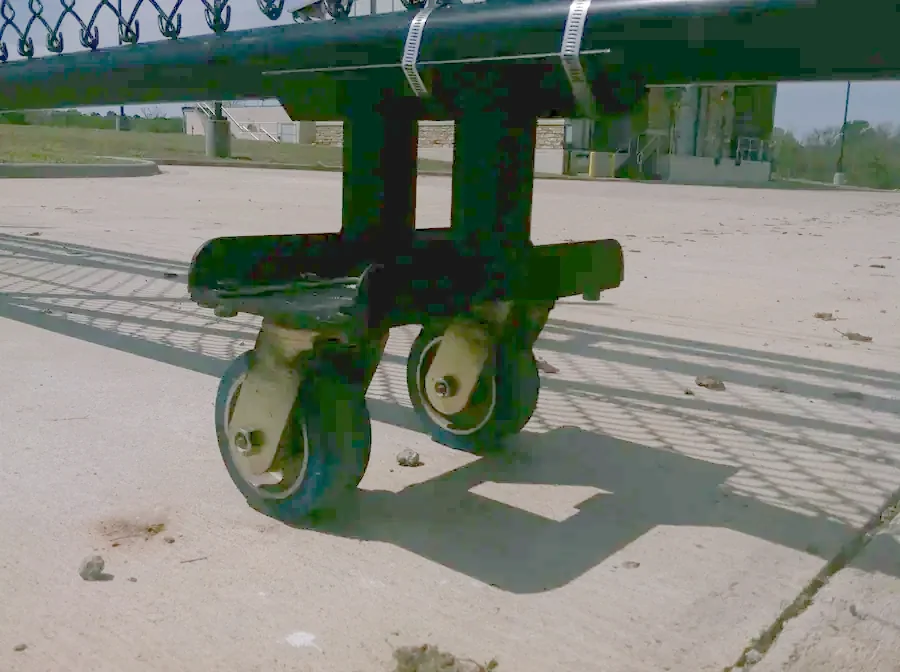
Cantilever gates
They slide across the opening supported by posts and rollers beside the entrance, without a ground track through the vehicle path. Suitable for:
- Commercial entrances
- Industrial facilities
- Warehouses
- Storage yards
- Apartment communities
- Government properties
- Wide automatic entrances
The full gate is longer than the clear opening because it includes a counterbalance section.
Designed for the slope, not adjusted afterwards
A standard square swing gate installed across a slope may drag against the driveway, leave a large opening beneath one side, fail to open fully, swing downhill, place additional strain on hinges, or reduce vehicle clearance.
Depending on the property, the solution may involve
- A custom hillside gate
- Adjusted frame geometry
- Revised swing direction
- Increased setback
- A sliding gate
- A cantilever gate
- Changes to the surrounding fence
Gate posts and foundations
Gate-post requirements may be affected by gate width, weight and height, swing or sliding operation, wind exposure, operator force, soil conditions, mountain rock, expansive clay, drainage and the number of daily cycles. A quality custom gate cannot perform properly when installed on an inadequate or unstable support system.
A manual gate may be suitable when
- The entrance is used infrequently
- The user can safely leave the vehicle
- The gate is light enough to operate comfortably
- Controlled credentials are not needed
- Electrical service is unavailable
An automatic gate may be better when
- The entrance is used daily
- Several people need access
- The gate controls a commercial property
- Drivers should remain in their vehicles
- Entry records or managed credentials are needed
- The entrance operates during poor weather
- Opening a large gate manually is impractical
A gate should move freely before an operator is installed. Automation will not correct a dragging, bent, unbalanced, or poorly aligned gate.
An entrance should be planned around everyone who uses it
Vehicle gates and pedestrian gates should be separated when practical. Safety-device requirements vary by gate type, operator, property use, and project conditions.
The gate should never be treated as a substitute for supervision, traffic procedures, or property management.
That may include
- Residents
- Employees
- Customers
- Visitors
- Delivery drivers
- Children
- Maintenance personnel
- Emergency responders
Gate problems may involve
- Sagging
- Dragging
- Broken hinges
- Worn rollers
- Damaged tracks
- Bent frames
- Broken welds
- Support-post movement
- Latch failure
- Vehicle impact
- Operator strain
- Failure to open or close fully
A focused repair may be practical when the frame and support system remain usable.
Replacement may provide better value when
- The frame is badly twisted
- The opening is too narrow
- Several welds are failing
- The posts are undersized
- The gate does not fit the slope
- Automation is being added
- Repair problems keep returning
Problems involving operators, keypads, readers, intercoms, or sensors should be evaluated through the appropriate access-control service.
Our gate design and installation process
1
Property and opening review
We evaluate the opening, fence, grade, vehicles, traffic, and intended gate use.
2
Gate recommendation
Gate type, material, size, swing or travel direction, manual or automatic operation, and access-control needs.
3
Written proposal
A written scope describing the gate, major components, fabrication, installation, and related work.
4
Measurements and fabrication
Final measurements are confirmed, and custom components are fabricated in our shop when required.
5
Post and support installation
Gate posts, supports, and connected fence sections are installed according to the approved design.
6
Gate installation
The gate is hung or placed on its supporting system and adjusted for alignment and clearance.
7
Operator and entry equipment
Automatic operators and approved access-control equipment are installed and configured when included.
8
Final review
We inspect the gate’s movement, fit, hardware, and approved operating components. Applicable warranty and maintenance information is provided.
The gate, the fence and the equipment together
- 01
Serving the region since 1950
Fencing, gates, fabrication, and perimeter-security solutions since 1950.
- 02
In-house gate fabrication
We fabricate custom gates through our own metal shop rather than relying only on standard sizes.
- 03
Fence, gate and access control
We can coordinate the surrounding fence, physical gate, automatic operator, and entry equipment.
- 04
Employee crews
Our primary fence and gate work is completed by Modern Fence Company employees.
- 05
Experience with difficult sites
We design gates around slopes, mountain rock, expansive clay, drainage, wide openings, and unusual property conditions.
- 06
Residential through government experience
Homes, estates, farms, apartment communities, commercial properties, industrial facilities, municipalities, and government projects.
- 07
Licensed and insured
Modern Fence Company is licensed and insured for the work we perform.
Custom gates across
Western Arkansas & Eastern Oklahoma
We install and service gates throughout:
Our normal service area extends approximately 75 miles from Fort Smith. We may travel farther for larger commercial, industrial, government, and specialty gate projects.
Estate entrances, ranch gates and controlled commercial openings
Visit our project gallery for custom steel and ornamental gates, driveway and estate entrances, ranch gates, steel-frame wood gates, chain link double-drive gates, sliding and cantilever entrances and access-controlled openings. You can also read customer reviews.
Do you build gates in-house?
Yes. We fabricate custom steel and ornamental gate components in our own shop.
Do you install residential driveway gates?
Yes. We provide manual and automatic driveway gates for homes, estates, farms, and ranches.
Do you install commercial gates?
Yes. We fabricate and install swing, sliding, cantilever, chain link, ornamental, and controlled-access commercial gates.
Can you build a gate for a sloped driveway?
Yes. We evaluate the grade and may recommend a custom hillside, sliding, cantilever, or revised swing-gate design.
Do you install automatic gates?
Yes. We install automatic systems for qualifying residential, commercial, industrial, and government entrances.
Can you add a keypad or card reader?
Yes. Keypad, card, RFID, telephone entry, intercom, and other access-control options are available.
Can you build a gate for tractor-trailer access?
Yes. The opening must be planned around vehicle width, turning radius, trailer swing, road width, and gate setback.
Do you repair existing gates?
Yes. We repair qualifying manual gates and coordinate automatic-gate and access-control repairs.
Can you replace only the gate?
Possibly. The existing posts, hinges, surrounding fence, opening, and grade must be evaluated first.
Can you match an existing ornamental gate?
We can create compatible custom components, but an exact match may not be possible when the original design, material, or coating is unavailable.
Do you provide free estimates?
Yes. Contact us with the property location, gate opening, intended use, vehicle requirements, and whether automatic access is needed.
Built around the opening and the way it is used
We will evaluate the property and recommend a gate system built around the opening and the way it will be used.
Tell us
- Where the property is located
- Whether the gate is residential or commercial
- The type of fence around the opening
- The approximate opening width
- The largest vehicles using the entrance
- Whether the driveway is sloped
- Whether a manual or automatic gate is preferred
- Whether pedestrian access is needed
- Whether a keypad, card reader, intercom, or other entry system is needed
- Whether existing gates or posts must be removed
- Whether columns or masonry are involved
- Your preferred project timing