Commercial security fencing
Commercial security fencing helps control who can enter a property, where they can enter, and how vehicles and pedestrians move through the site — while still supporting deliveries, employee access, maintenance, visitors, and emergency response.
Protect the perimeter without disrupting operations
We install commercial security fencing throughout Fort Smith, Western Arkansas, and Eastern Oklahoma.
Our security fence capabilities include
- Commercial chain link security fencing
- Industrial perimeter fencing
- Ornamental iron security fencing
- Increased fence heights
- Heavier posts and framework
- Smaller-mesh chain link options
- Bottom and mid rails
- Privacy slats and screening
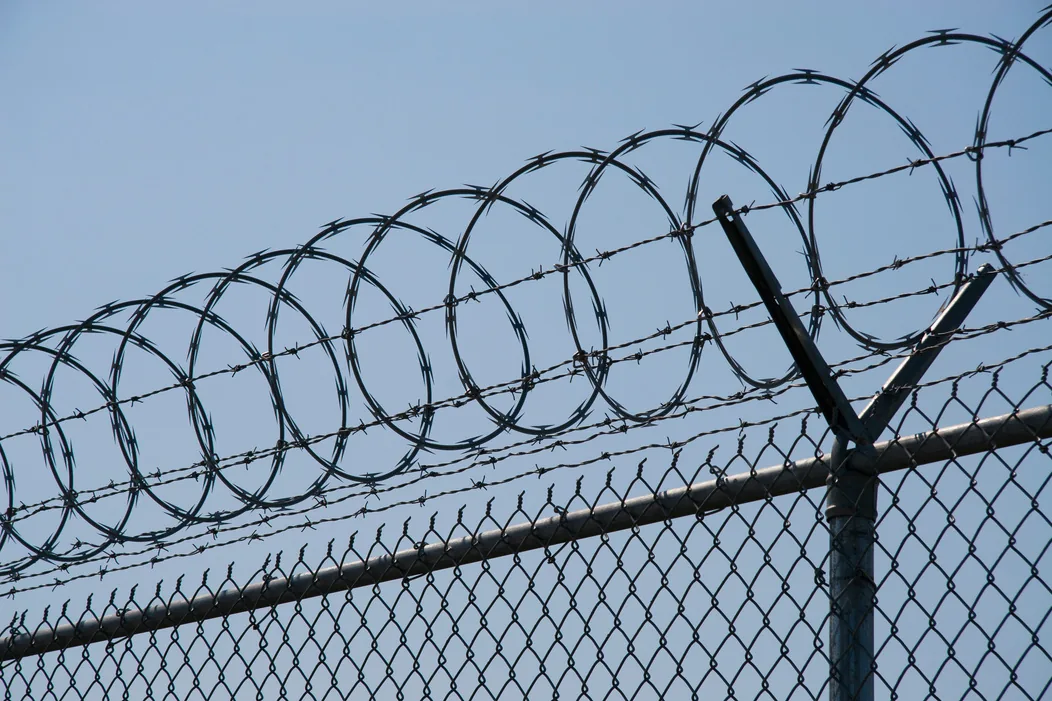
- Barbed wire and approved security toppings
- Controlled pedestrian gates
- Commercial vehicle gates
- Sliding and cantilever gates
- Automatic gate operators
- Keypad and card access
- RFID entry systems
- Telephone entry and intercoms
- Camera integration
- Fence and gate repair
- Access-control maintenance
A strong perimeter can still fail if gates are left open, entry devices are poorly located, trucks cannot turn through the entrance, or employees must walk through an active vehicle gate.
Not every property needs the same security level
A decorative office boundary, apartment entrance, warehouse perimeter, equipment yard, and restricted government property each have different requirements.
The goal is to create a practical level of protection without making authorized access unnecessarily difficult.
Before recommending a system, we consider
- What the fence must protect
- The value of equipment or materials
- Public access near the property
- Hours of operation
- Employee traffic
- Visitor traffic
- Delivery schedules
- Vehicle types
- Pedestrian access
- Existing security procedures
- Gate operating frequency
- Privacy needs
- Visibility from the building
- Camera coverage
- Lighting
- Adjacent properties
- Terrain and drainage
- Local requirements
- Insurance or project specifications
One property may use different systems in different areas
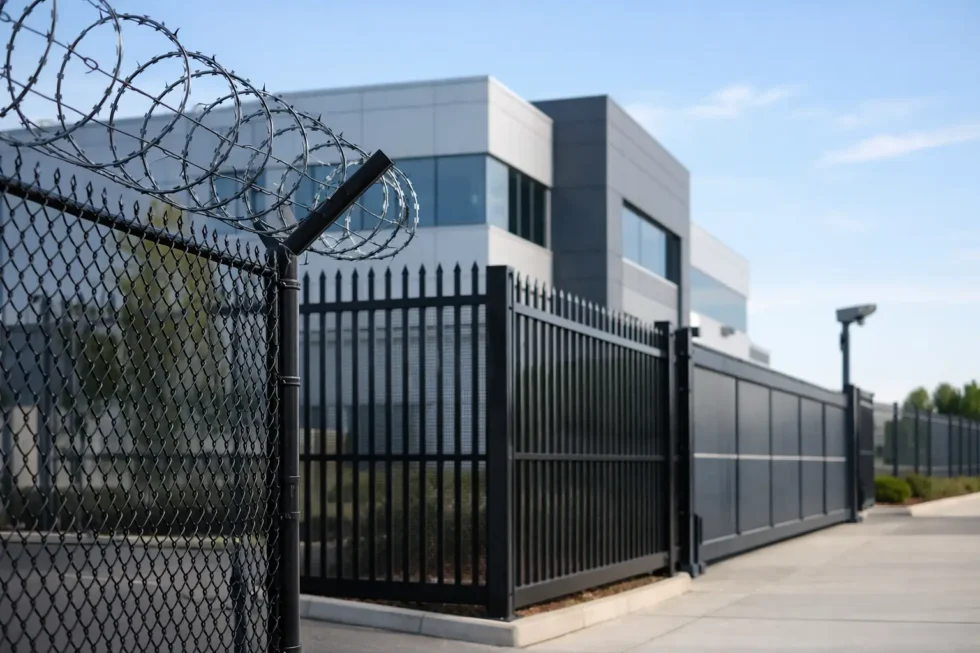
A public-facing entrance may use ornamental iron while the rear storage perimeter uses heavier chain link with security toppings and an automatic cantilever gate.
- Warehouses
- Manufacturing facilities
- Industrial properties
- Storage yards
- Equipment yards
- Contractor properties
- Utility facilities
- Apartment communities
- Schools
- Medical properties
- Hotels
- Commercial parking areas
- Municipal properties
- Government facilities
- Retail service areas
- New developments
- Vacant commercial properties
- Properties with repeated trespassing
- Sites with controlled outdoor storage
The fabric is only one part of the system
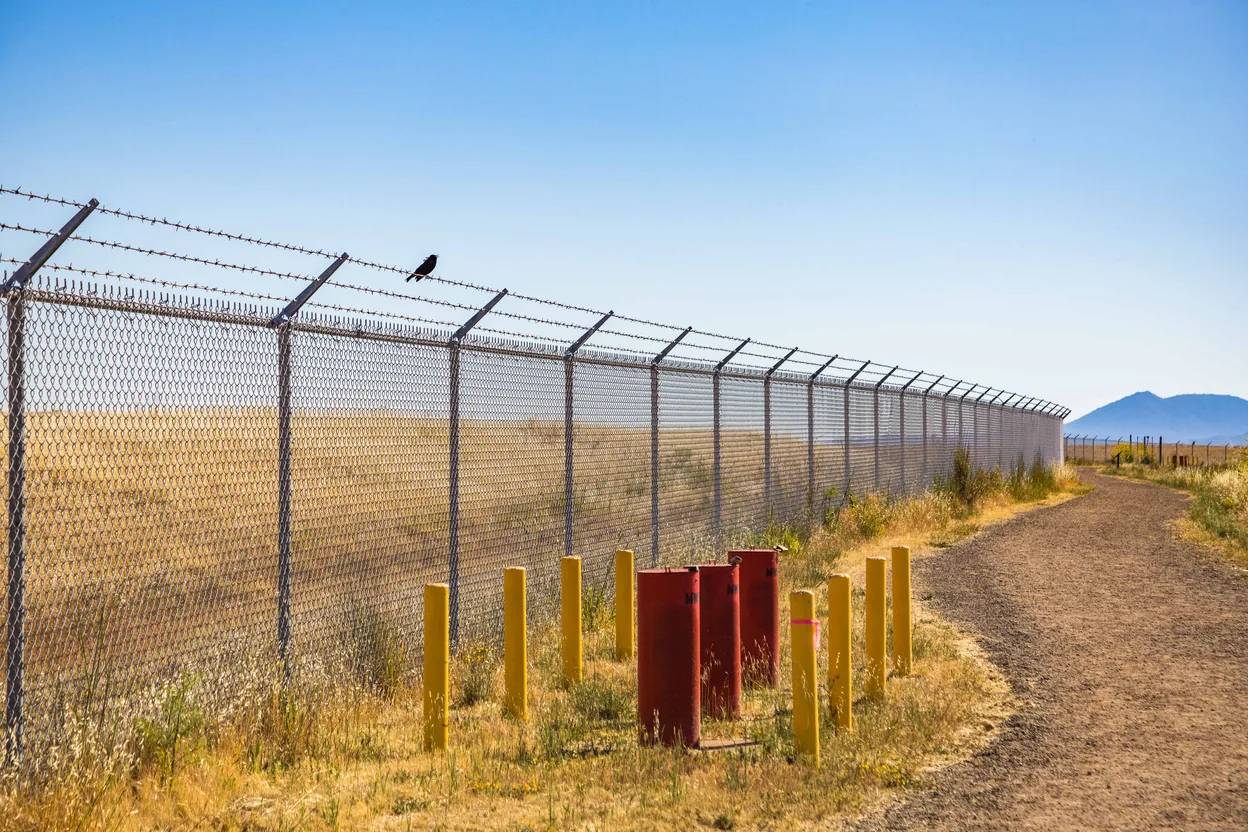
Commercial chain link fencing is one of the most flexible security systems for larger commercial and industrial properties. It can be customized through changes in:
- Fence height
- Wire gauge
- Mesh size
- Post size
- Rail size
- Post spacing
- Bracing
- Bottom rails
- Mid rails
- Galvanized or coated finish
- Privacy slats
- Wind screen
- Security toppings
- Gate construction
- Access-control integration
Posts, rails, braces, fittings, foundations, gates, operators, and entry devices must work together. A light chain link fence should not be expected to provide the same performance as a heavier system designed for commercial or industrial security.
Specify the whole system for the height you choose
Fence height may be affected by
- Property use
- Security concerns
- Stored equipment
- Adjacent public areas
- Insurance requirements
- Project specifications
- Privacy needs
- Security toppings
- Local regulations
- Gate height
- Wind exposure
The complete system must be specified for the selected height rather than adding taller fabric to framework designed for a lower fence.
Heavier wire and framework may include
- Heavier chain link fabric
- Larger terminal posts
- Larger line posts
- Stronger gate posts
- Larger top rails
- Bottom rails
- Mid rails
- Additional bracing
- Deeper or larger foundations
- Commercial-grade fittings
Our proposals identify the major system specifications so the customer can understand what is included.
Smaller mesh may be considered for
- Restricted facilities
- Utility properties
- High-value storage
- Government projects
- Equipment yards
- Areas with repeated unauthorized access
- Properties with project-specific security requirements
Security-focused fabric provides limited value when the posts, rails, gates, or access procedures remain weak.
Additional rails and bracing may improve support where the fence has increased height, heavier fabric, smaller mesh, privacy screening, security toppings, greater exposure, frequent contact, or project-specific requirements. A bottom rail can create a more defined lower edge and may provide additional support in high-use areas.
Plan the topping with the fence, not after it
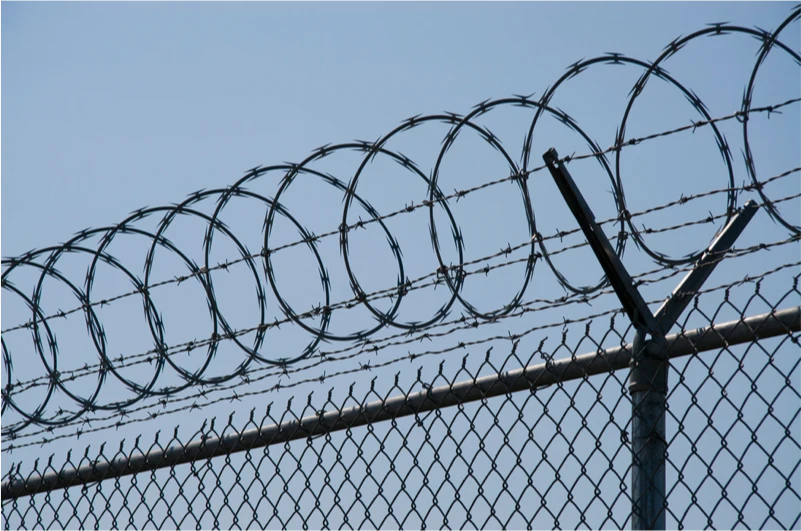
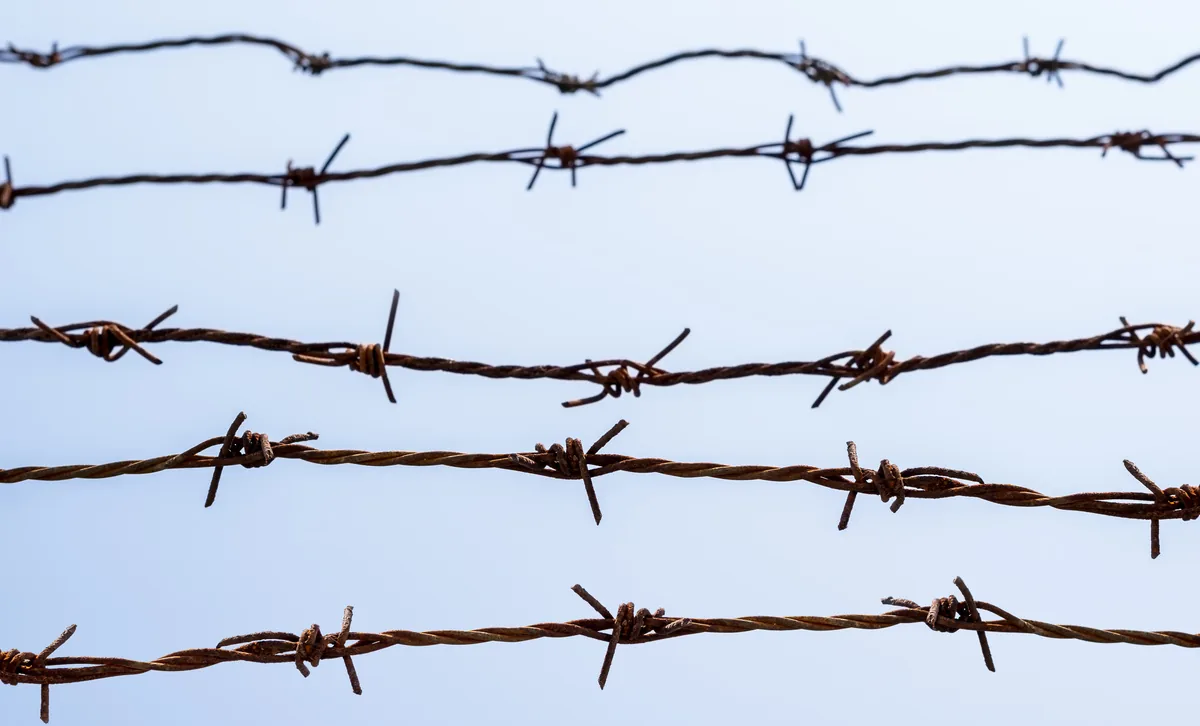
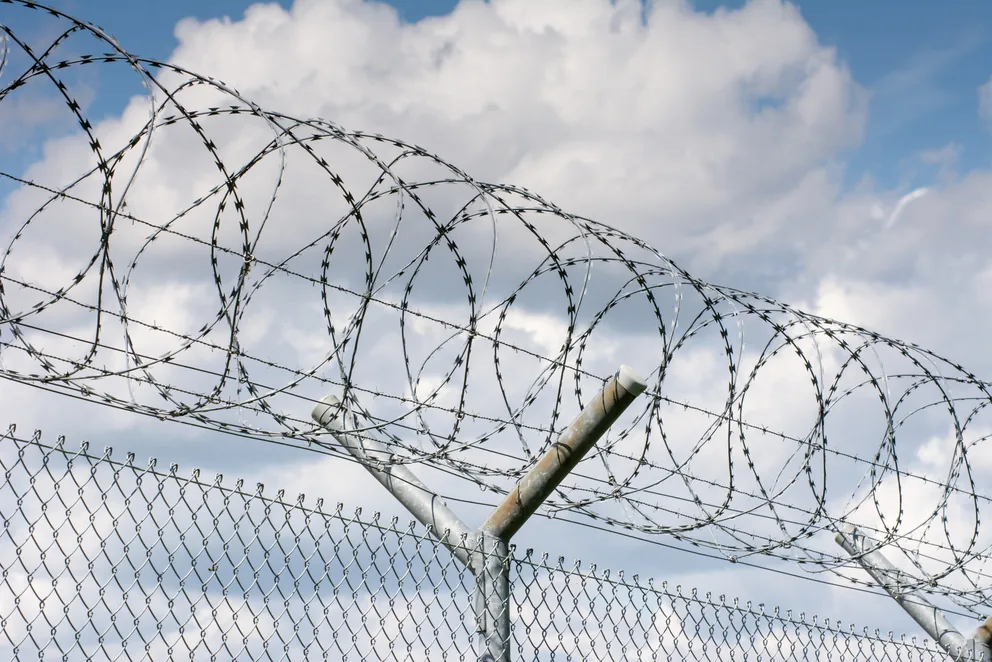
Options may include barbed-wire arms, extended fence height, obstacle wire, and other approved perimeter-security components.
The design should consider
- Public sidewalks
- Residential properties
- Employee areas
- Pedestrian gates
- Vehicle gates
- Maintenance access
- Local requirements
- Insurance requirements
- Project specifications
- Emergency access
Security toppings should be included in the original fence plan rather than added to a system that may not be able to support them.
A high fence is easy to cross with a step beside it
Reducing climbability may involve more than increasing fence height. The complete layout may need to address:
- Mesh size
- Horizontal rails
- Nearby structures
- Trees
- Utility equipment
- Stored materials
- Trash containers
- Signs
- Gates
- Columns
- Ground elevation
- Adjacent walls
We review visible conditions around the planned perimeter and identify areas that may weaken the security design.
The entrance is the most vulnerable part of a fenced property
A gate must provide authorized access without weakening the surrounding perimeter. We fabricate commercial security gates in our own shop.
Gate types may include
- Pedestrian gates
- Double-drive swing gates
- Single-swing gates
- Sliding gates
- Cantilever gates
- Chain link gates
- Ornamental iron gates
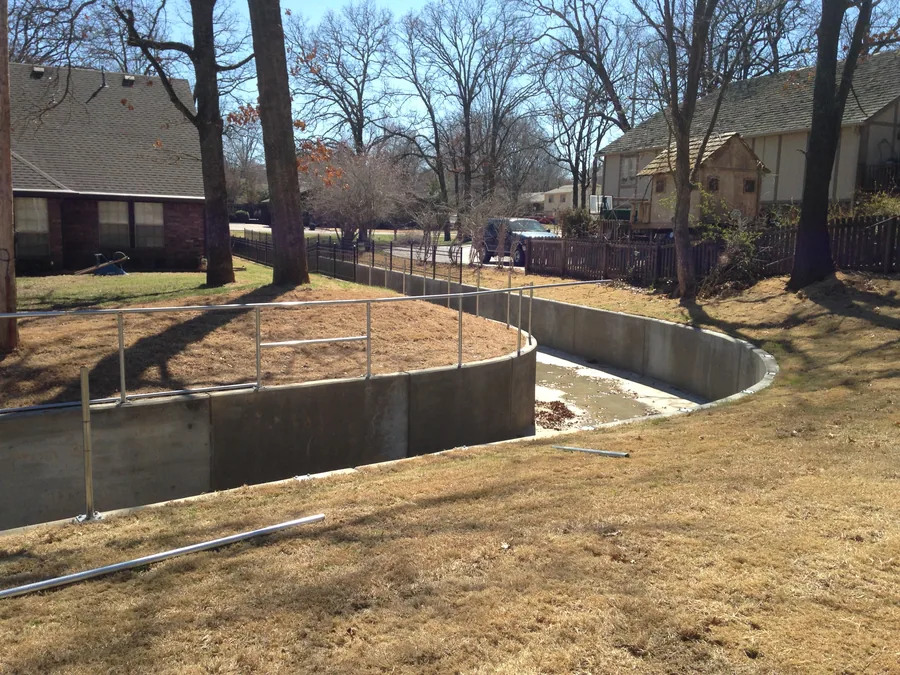
- Custom hillside gates
- Manual gates
- Automatic gates
Custom fabrication controls
- Gate dimensions
- Frame strength
- Materials
- Hinges
- Rollers
- Supports
- Hardware
- Bottom clearance
- Operator compatibility
- Fit with the surrounding fence
Vehicle gate planning
Gates should be planned around the largest and most difficult vehicles using the entrance — and the clear opening is only part of the design:
- Road width
- Driveway width
- Approach angle
- Turning radius
- Gate setback
- Vehicle stacking
- Slope
- Traffic direction
- Entry-device location
- Gate operating time
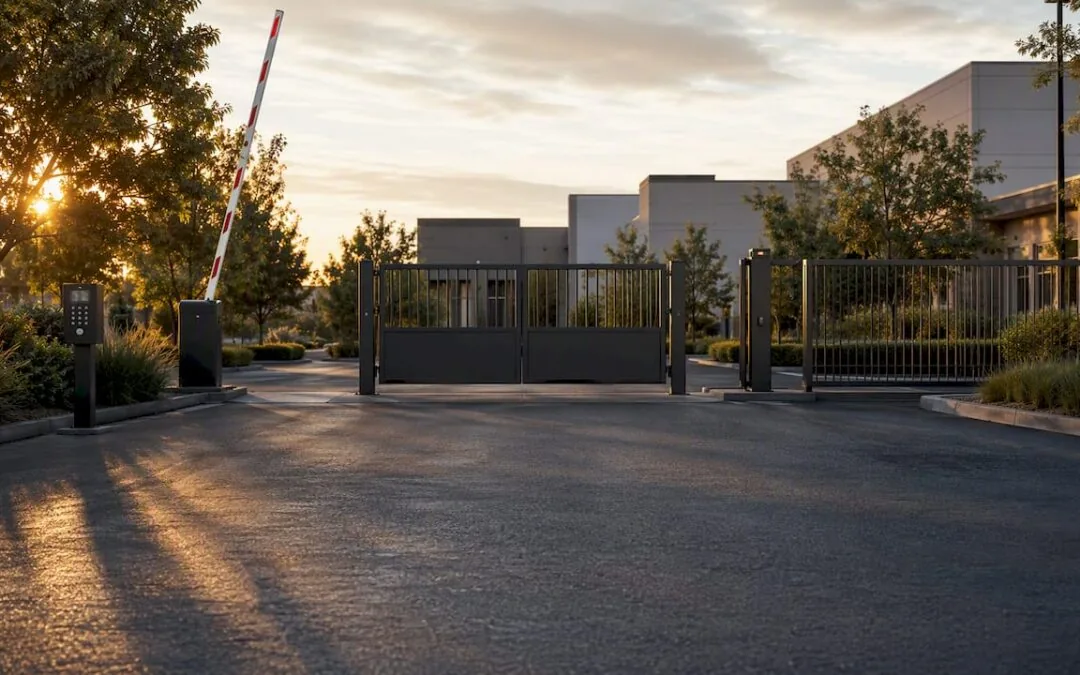
Sliding and cantilever security gates
They may work well when swing space is limited, a wide opening is needed, vehicle traffic is frequent, trucks need clear stacking space, the property needs automatic controlled entry, or a ground track would be difficult to maintain.
A cantilever gate requires enough room beside the opening for the gate frame and counterbalance section.
The gate must move correctly before automation is installed
An automatic gate allows authorized vehicles to enter without requiring an employee to manually open the entrance, and access control systems determine how authorized users enter the property.
Systems may include
- Swing gate operators
- Slide gate operators
- Cantilever gate operators
- Remote controls
- Keypads
- Card readers
- RFID readers
- Telephone entry
- Intercom systems
- Cellular access
- Vehicle detection
- Safety loops
- Photo eyes
- Camera integration
The operator is selected on
- Gate type
- Gate length
- Gate weight
- Expected daily cycles
- Wind exposure
- Power availability
- Vehicle traffic
- Security requirements
- Site conditions
A dragging or poorly balanced gate can damage the operator and cause repeated entrance failures.
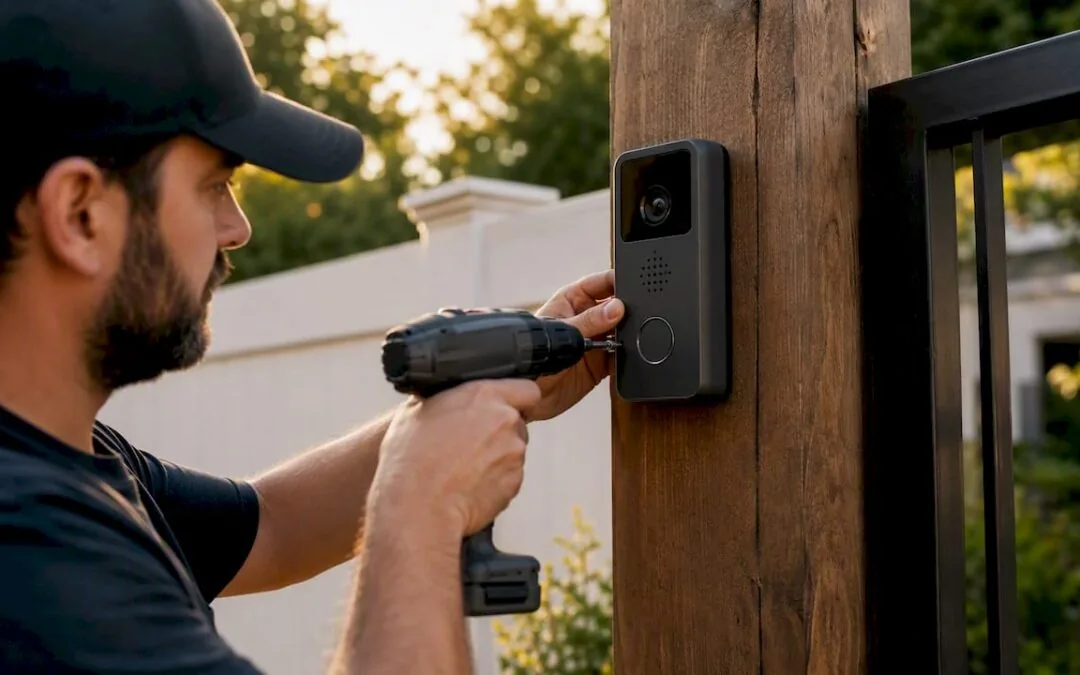
Perimeter, gates and entry as one system
- 01
Serving the region since 1950
More than 75 years of fencing and perimeter-security work.
- 02
Commercial through government experience
Commercial, industrial, municipal, state, federal, and Department of Defense projects.
- 03
In-house gate fabrication
Commercial swing, slide, cantilever, chain link, ornamental and custom hillside gates from our own shop.
- 04
Access-control capabilities
We install automatic operators, keypads, card readers, RFID systems, telephone entry, intercoms, and related equipment.
- 05
Complete perimeter planning
We coordinate the fence, gates, pedestrian entrances, operators, and access devices as one system.
- 06
Property-specific specifications
We plan materials and layout around the property’s risks, traffic, terrain, operations, and security requirements.
- 07
Licensed, insured and warrantied
Licensed and insured for the work we perform, with job-specific bonding available when required. Installations include a one-year workmanship warranty — review our warranty information.
Commercial security fencing across
Western Arkansas & Eastern Oklahoma
We provide commercial security fencing throughout:
We also serve properties throughout Sebastian, Crawford, Franklin, Logan, Scott, Le Flore, Sequoyah and Haskell counties. Our normal service radius is approximately 75 miles from Fort Smith; we may travel farther for larger commercial, industrial, government, and specialty projects.
Security perimeters, controlled entrances and screened yards
Visit our project gallery for commercial security perimeters, high-security chain link, ornamental entrance fencing, privacy screening, security toppings, equipment and storage-yard fencing, sliding and cantilever gates, automatic entrances, pedestrian access, keypad and card access, and commercial repairs. You can also read customer reviews.
Security fencing questions
Visit our fencing and access control FAQ for more answers.
What is commercial security fencing?
Commercial security fencing is a perimeter system designed to help limit unauthorized access and protect property, equipment, people, or operations.
What type of fence provides the most security?
The appropriate system depends on the property. Height, wire or panel construction, posts, rails, gates, security toppings, access control, visibility, and procedures all affect security.
Can you install high-security chain link fencing?
Yes. Available options may include increased height, heavier fabric, smaller mesh, stronger framework, additional rails, bracing, and security toppings.
Do you install barbed wire?
Barbed wire and other approved security toppings may be available where appropriate and allowed by project and local requirements.
Can you add privacy to a security fence?
Yes. Privacy slats, screening, wood, and custom metal options may be available. The fence must be designed for the added wind load.
Do you install ornamental security fencing?
Yes. Ornamental iron can provide controlled access with a more finished appearance for commercial entrances and public-facing boundaries.
Can you combine chain link and ornamental fencing?
Yes. The same property often uses ornamental iron on the public-facing entrance and heavier chain link with security toppings around rear storage or equipment areas.
Protection that still lets the right people in
A commercial security fence should protect the property while allowing employees, vehicles, deliveries, residents, and authorized visitors to enter efficiently. We will review the property and help plan a fence, gate, and access-control system that fits its security and operating needs.
Tell us
- Where the property is located
- What type of property is involved
- What the fence needs to protect
- The approximate perimeter length
- The security concerns you are addressing
- The fence height being considered
- Whether privacy is needed
- Whether security toppings are required
- The number and width of vehicle gates
- The largest vehicles using the entrances
- Whether pedestrian access is needed
- Whether automatic gates are required
- Whether keypad, card, or RFID access is needed
- Whether existing fencing must be removed
- Whether plans or specifications are available
- The required completion schedule
- Any insurance or bonding requirements