
Temporary fence rental
A permanent fence is not always the right solution. Construction work, renovations, demolition, storm damage, equipment storage, and property improvements may create a temporary need to control access to part or all of a site.
Perimeter control for active projects
Modern Fence Company provides temporary fence rental for qualifying projects throughout Fort Smith, Western Arkansas, and Eastern Oklahoma.
Temporary fencing may help
- Define an active work area
- Limit unauthorized entry
- Separate pedestrians from construction activity
- Protect stored materials and equipment
- Control access during permanent fence replacement
- Close an opening created by storm or vehicle damage
- Establish temporary vehicle and pedestrian entrances
- Support phased construction
- Maintain a temporary property boundary
- Protect selected areas during repairs
We review the property, intended use, layout, project duration, gates, ground conditions, and expected traffic before confirming availability and scope.

Enclosing the largest possible area is not a plan
The temporary layout should reflect how the property will operate during the project.
A fence that blocks deliveries, emergency access, tenant traffic, or construction equipment may create more problems than it solves. We plan the temporary boundary around the actual site.
Potential applications include
- Commercial construction
- Building renovations
- Demolition projects
- Municipal improvements
- Utility work
- Permanent fence replacement
- Storm-damaged properties
- Equipment staging
- Material storage
- Restricted work areas
- Property transitions
- Phased developments
Open excavations, equipment and public sidewalks
Temporary construction fencing can help:
- Establish the site perimeter
- Direct workers toward approved entrances
- Separate the public from active construction
- Limit casual entry
- Define material-storage areas
- Protect equipment
- Separate occupied and unoccupied areas
- Support phased work
- Create temporary access points
The layout should be reviewed against
- Construction entrances
- Delivery routes
- Equipment movement
- Pedestrian paths
- Public sidewalks
- Parking
- Emergency access
- Material staging
- Other contractors
- Future phases of work
As the project changes, the fence may need to be moved, expanded, or reconfigured. Those changes should be planned rather than made informally by moving sections without reviewing stability and access.
Removing a fence leaves the property open
Temporary fencing may be appropriate when the property needs continued control around commercial yards, apartment communities, equipment areas, utility properties, residential yards, government properties, construction sites and controlled entrances.
The available arrangement depends on
- Length of the open perimeter
- Required security level
- Gate needs
- Ground conditions
- Project duration
- Property use
- Crew access
- Material delivery
- Existing structures
Temporary fencing does not provide the same long-term performance as a properly installed permanent fence. It is intended to support the property during a limited project period.
Short-term control while repairs are scheduled
Temporary fencing may help provide short-term control while:
- Damage is evaluated
- Insurance documentation is gathered
- Materials are ordered
- Custom gates are fabricated
- Permanent repairs are scheduled
- Hazardous areas are cleared
Temporary fencing does not correct unstable posts, damaged gates, broken operators, or leaning sections that remain beside the temporary barrier. Our commercial fence repair and maintenance team can evaluate permanent repair or replacement needs.
A temporary perimeter is not a security system
The layout should consider:
- Equipment size
- Delivery vehicles
- Loading and unloading
- Employee access
- Ground conditions
- Visibility
- Lighting
- Nearby traffic
- Project duration
- Required gate openings
The property owner or project manager remains responsible for determining whether temporary fencing provides an appropriate level of protection. High-value equipment or materials may require additional security measures beyond a temporary perimeter.
Public layouts need careful attention
Temporary fencing may be useful during qualifying municipal construction, park improvements, public-building renovations, utility work, sidewalk projects, athletic-property improvements, public facility repairs and permanent fence replacement.
- Pedestrian routes
- Public access
- Accessibility
- Work-zone boundaries
- Vehicle traffic
- Employees
- Contractors
- Emergency access
- Project phases
For permanent public-property work, visit our government and municipal fencing page.
A gate placed away from the walkway invites an informal opening
Pedestrian gates
A temporary enclosure may require controlled pedestrian access for workers, inspectors, property managers, maintenance personnel, authorized contractors and deliveries made by hand.
The project representative should determine how pedestrian access will be supervised or secured when the site is unattended.
Vehicle gates
Vehicle gates may be needed for construction trucks, delivery vehicles, trailers, heavy equipment, maintenance vehicles, emergency access and material handling. We also consider:
- Turning radius
- Road width
- Approach angle
- Vehicle stacking
- Trailer swing
- Ground conditions
- Traffic direction
- Gate operation
- Nearby pedestrians
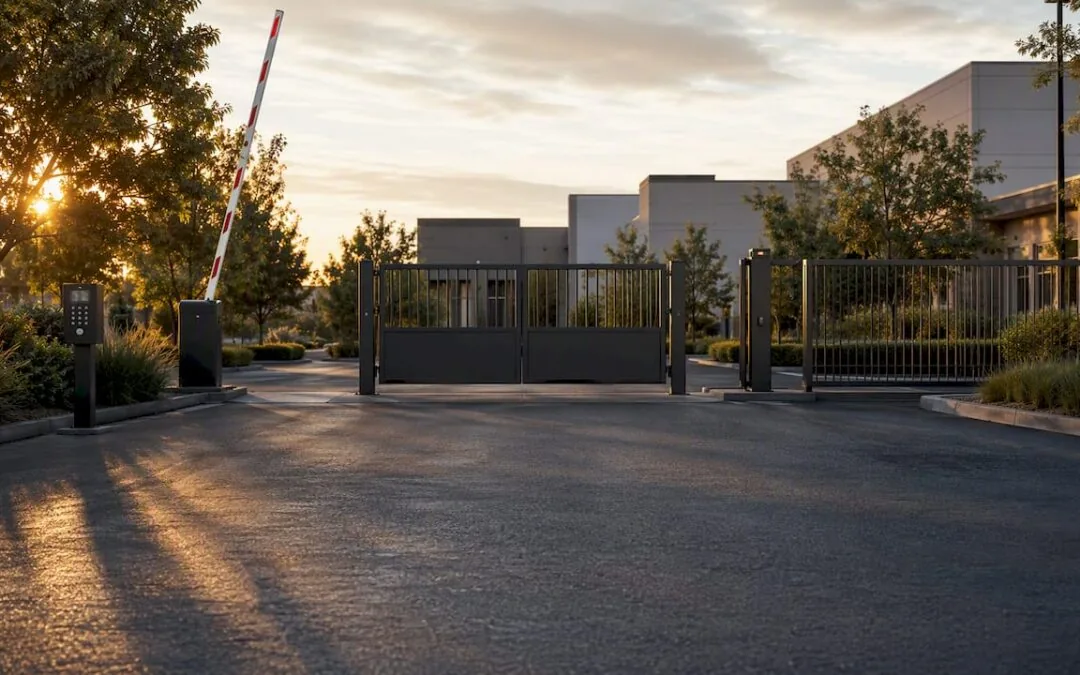
Working around existing access control
When a property already has automatic gates, keypads, card readers, or other equipment, the temporary layout may need to work around that entrance:
- Will the permanent gate remain operational?
- Will vehicles use a different temporary entrance?
- Must pedestrian access be redirected?
- Will power or communication service be interrupted?
- Will equipment cross access-control loops or wiring?
- How will emergency entry be maintained?
More advanced entry needs should be addressed through our access control systems services.
A temporary gate should not force large vehicles to back into public traffic or block a roadway longer than necessary.
A layout that works on level pavement may not work on soft ground
Site conditions may include
- Soil
- Grass
- Gravel
- Asphalt
- Concrete
- Slopes
- Uneven ground
- Drainage areas
- Mountain rock
- Expansive clay
- Recently disturbed soil
Weather in this region
- High winds
- Heavy rain
- Ice
- Snow
- Saturated ground
- Freezing temperatures
- Storm debris
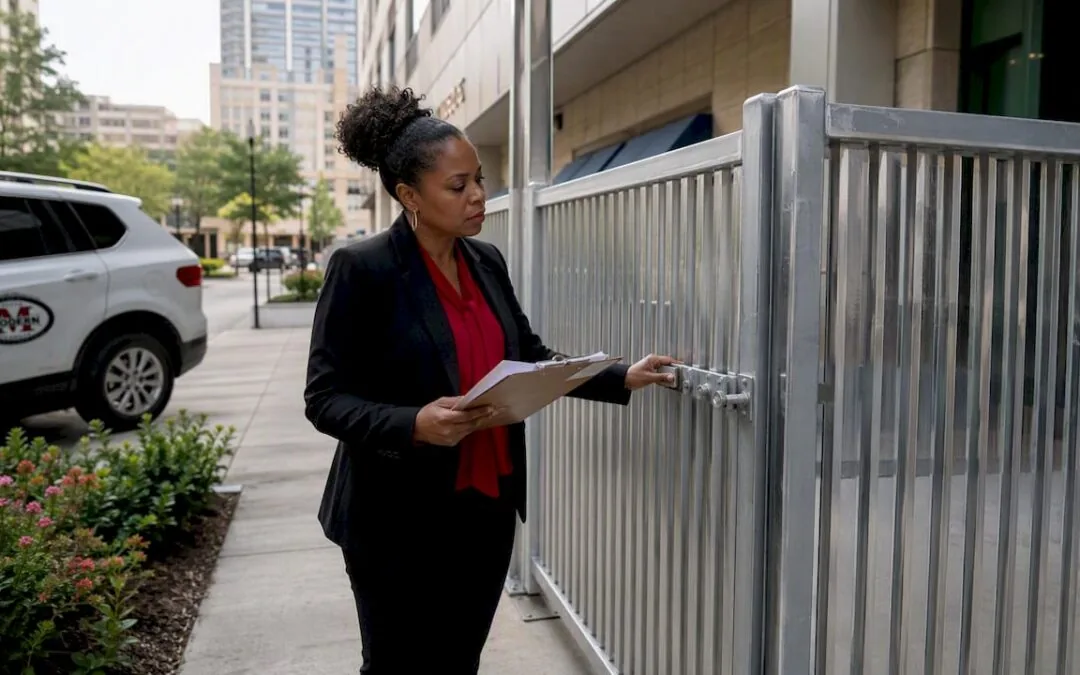
The project representative should inspect the temporary perimeter after significant weather and report visible movement, damage, open sections, or unstable gates.
Privacy screening depends on
- Temporary fence configuration
- Wind exposure
- Ground conditions
- Project duration
- Attachment method
- Nearby buildings
- Public walkways
- Site requirements
Screening increases wind pressure and should not be added without evaluating whether the system and site conditions can support it.
Temporary fencing does not replace site management
The property owner, general contractor, or project representative should continue to address:
- Site supervision
- Warning signs
- Safe pedestrian routes
- Lighting
- Hazard control
- Equipment security
- Emergency procedures
- Locking methods
- Construction safety
- Required inspections
- Public access
The fence should not be used to support materials, signs, tarps, cords, or other items unless those additions have been reviewed. Unapproved attachments can increase wind load or make the system unstable.
The shortest route is not always the most practical
A useful temporary fence plan should identify:
- Areas that must be enclosed
- Areas that must remain open
- Vehicle entrances
- Pedestrian entrances
- Public walkways
- Emergency routes
- Material-storage areas
- Delivery routes
- Existing permanent fencing
- Buildings and structures
- Slopes and drainage
- Future project phases
A slightly different route may improve vehicle movement, reduce conflict with pedestrians, or avoid unstable ground.
Our temporary fence rental process
1
Project information
Property location, project type, approximate fence length, number of gates, vehicle sizes, surface conditions, requested installation date, expected duration, work-hour restrictions and public-access concerns.
2
Site and layout review
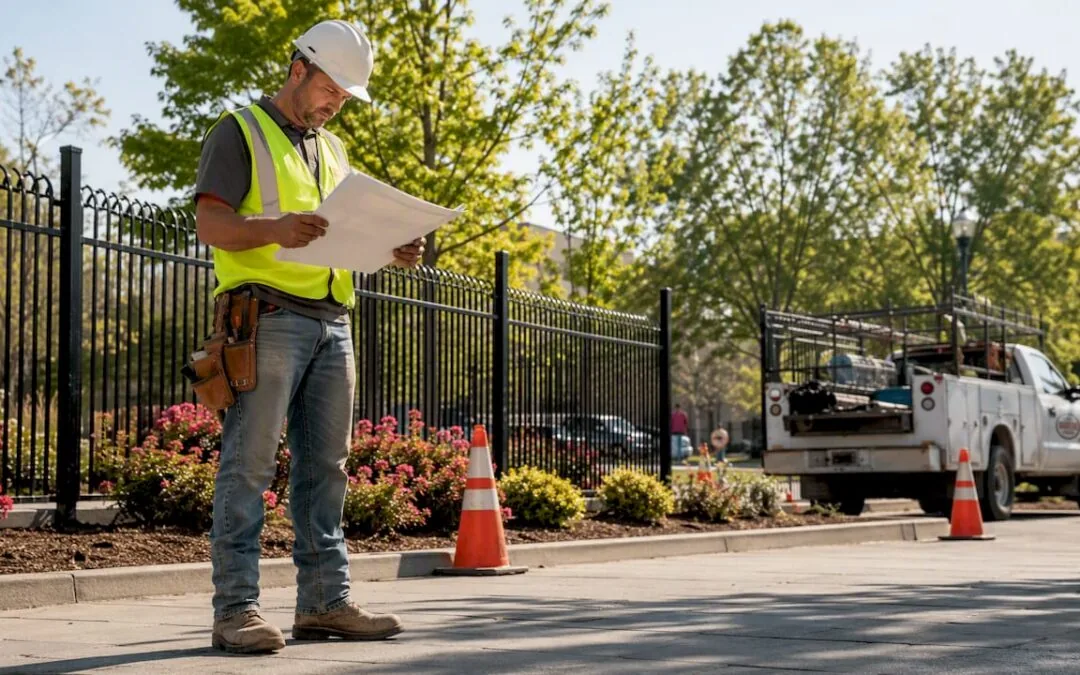
We review plans, photographs, measurements or visible conditions: perimeter route, gates, vehicle movement, pedestrian access, emergency routes, terrain, existing fencing, nearby structures and project phases.
3
Written proposal
Prepared on the requested layout, equipment, installation, rental period and removal scope.
4
Scheduling
After approval and any required project documentation are received, we schedule the work based on equipment and crew availability.
5
Installation
Our crew installs the approved temporary fence and gate layout.
6
Rental-period service
Requested changes, damage, relocation, or extensions are coordinated through our office and may affect the scope.
7
Removal
After receiving the required notice and confirming site access, we remove the temporary fencing included in the rental.
Before installation, the project representative should
- Confirm the layout
- Provide site access
- Identify restricted areas
- Mark known private utilities
- Move stored materials from the fence line
- Identify vehicle entrances
- Identify pedestrian entrances
- Confirm emergency access
- Communicate work-hour restrictions
- Notify other contractors
- Identify soft or unstable ground
- Confirm installation timing
- Provide an on-site contact
The scope may be affected by
- Total fence length
- Number and size of gates
- Project duration
- Installation and removal requirements
- Surface type
- Slope
- Ground conditions
- Wind exposure
- Screening requirements
- Public access
- Vehicle traffic
- Required relocations
- Distance from our Fort Smith shop
- Work-hour restrictions
- Equipment and crew availability
- Emergency scheduling
- Insurance or project-document requirements
We prepare project-specific proposals rather than publishing one rate for every temporary fence rental.
Temporary now, permanent later
- 01
Serving the region since 1950
We have served residential, commercial, industrial, municipal, and government properties since 1950.
- 02
Commercial and public-project experience
We understand the access, scheduling, documentation, and coordination needs that may affect active commercial and public properties.
- 03
Employee crews
Our primary fence work is completed by Modern Fence Company employees rather than unknown subcontracted crews.
- 04
Permanent fence capabilities
When temporary fencing is part of a larger replacement or construction project, we can also provide permanent commercial fencing, gates, and repairs.
- 05
Gate and access experience
We understand how vehicle size, turning radius, pedestrian movement, and emergency access affect temporary and permanent entrances.
- 06
Local site experience
We work with the slopes, rock, clay, drainage, rain, wind, and seasonal conditions common across the region.
- 07
Licensed and insured
Modern Fence Company is licensed and insured for the work we perform.
Temporary fencing across
Western Arkansas & Eastern Oklahoma
We provide temporary fencing for qualifying projects throughout our service area:
Our normal service territory extends approximately 75 miles from Fort Smith. We may travel farther for larger commercial, industrial, municipal, and government projects.
Temporary fence rental questions
Visit our fencing and access control FAQ for more answers.
What types of projects may qualify for temporary fencing?
Temporary fencing may be available for construction, renovation, demolition, permanent fence replacement, storm damage, commercial work zones, and qualifying public projects.
Do you install and remove the temporary fence?
Installation and removal should be identified in the written proposal for the project.
Can temporary fencing include gates?
Yes. Gate needs should be discussed during planning, including the number of openings and the vehicles using them.
Can you provide a gate for trucks or equipment?
The gate opening can be planned around the vehicles and equipment described for the project, subject to the available system and site conditions.
Can temporary fencing be installed on concrete or asphalt?
The appropriate installation method depends on the surface, layout, wind exposure, gates, and project requirements.
Can temporary fencing be installed on a slope?
Possibly. The grade and ground conditions must be reviewed before the layout is confirmed.
Can privacy screening be added?
Screening may be available for selected projects, but the added wind load and site exposure must be evaluated.
Can the temporary fence be moved during the project?
Relocation may be arranged through our office. The fence should not be moved by unauthorized site personnel.
Who is responsible for inspecting it during the rental?
The project representative should monitor the temporary perimeter and report damage, movement, open sections, or changing site conditions.
What happens when a vehicle damages the fence?
Damage should be reported promptly. Repair or replacement requirements depend on the affected equipment and project terms.
Can you provide temporary fencing while replacing a permanent fence?
Yes. Temporary fencing is often used to keep a commercial yard, apartment community, equipment area or controlled entrance secured while the permanent fence is removed and rebuilt.
Send the project details and we will confirm availability
We will review the project and confirm whether temporary fencing is available for the requested scope and schedule.
Tell us
- Where the property is located
- What type of project is involved
- What area needs to be enclosed
- The approximate fence length
- How many pedestrian gates are needed
- How many vehicle gates are needed
- The largest vehicles using the site
- The installation surface
- Whether the site is sloped
- Whether screening is requested
- The preferred installation date
- The expected rental duration
- Whether the layout may need to move
- Any work-hour restrictions
- Any insurance or documentation requirements