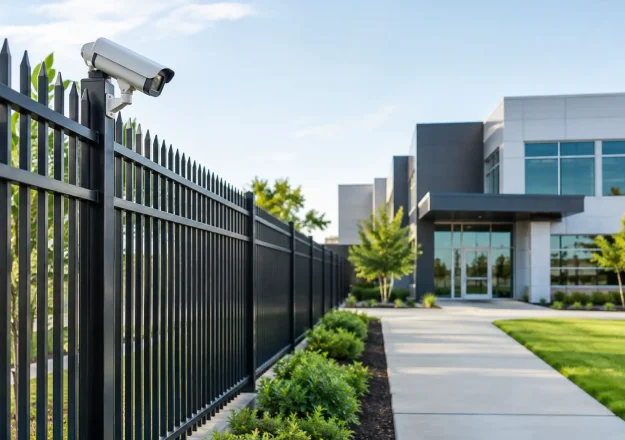
A commercial gate is often the first point of contact between your property and the public. It has to welcome authorized employees, tenants, customers, and delivery drivers while making unauthorized entry far more difficult. The best commercial gate security features do more than close an opening in a fence. They create clear control over who enters, when they enter, and how the gate performs under daily use.
For businesses, apartment communities, industrial yards, schools, farms, and construction sites across Western Arkansas and Eastern Oklahoma, the right setup depends on traffic patterns, operating hours, property layout, and the level of risk involved. A feature that makes sense for a small office parking lot may not be enough for a busy distribution yard with trucks arriving throughout the day.
Start With a Gate Built for the Job
Security features work best when the gate itself is properly designed and installed. A weak, undersized, or poorly aligned gate can become unreliable long before an access system has a chance to prove its value. Commercial slide gates are often a practical choice for wide entrances and high-traffic locations because they do not swing into drive lanes. Swing gates can be an excellent fit where space allows and a more traditional appearance is preferred.
Material matters, too. Chain link gates offer visibility and dependable perimeter control for industrial sites, storage areas, and equipment yards. Ornamental iron gates can provide a more polished entry for offices, multifamily communities, and professional properties without giving up strength. The gate frame, posts, hinges or rollers, latches, and foundation all need to be matched to the gate’s size and weight.
A commercial gate should not be selected by appearance alone. Wind exposure, slope, vehicle size, soil conditions, and the number of expected cycles each day can all affect the right design. Good security begins with a gate that opens, closes, and locks consistently.
Access Control Is the Core Security Feature
The most valuable commercial gate security feature is controlled access. Instead of relying on a padlock and a key that can be copied or misplaced, an access control system gives property owners a more manageable way to authorize entry.
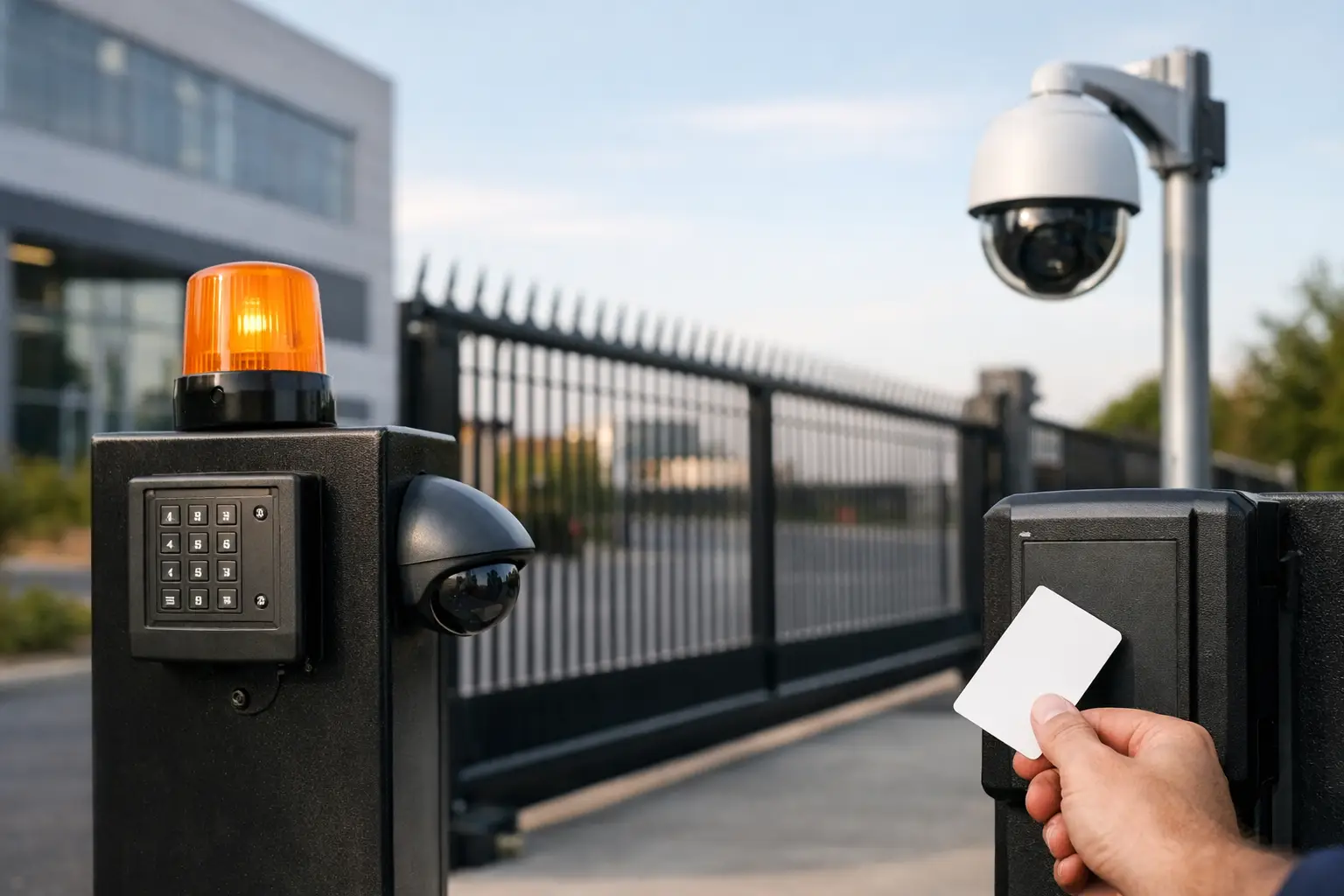
Keypads are a familiar and cost-effective option. Employees, vendors, or residents can use assigned codes to enter, and codes can be changed when staffing or tenant circumstances change. For a smaller operation with limited users, a keypad may be all that is needed.
For properties with frequent personnel changes or a larger number of users, card readers, key fobs, and mobile credentials offer greater control. Individual credentials can be activated or removed without changing a code for everyone else. This reduces the common problem of former employees, past contractors, or previous tenants retaining access after their relationship with the property ends.
Choose the Right Entry Method for Your Traffic
The right access method depends on who uses the gate. A warehouse with employees arriving in personal vehicles may benefit from key fobs or long-range vehicle transmitters. A gated community may need a visitor call box that lets residents confirm guests before opening the gate. A service yard may require keypad access for drivers who arrive at different times of day.
Some facilities benefit from combining methods. For example, employees can use fobs, approved delivery drivers can use time-limited keypad codes, and visitors can call the office through an intercom. This approach keeps day-to-day entry convenient without making the gate an open invitation.
Use Vehicle Detection to Protect People and Equipment
An automated gate must be safe as well as secure. Vehicle detection systems help prevent a gate from closing on a car, truck, trailer, or person. Photo eyes, safety loops, edge sensors, and monitored entrapment devices are not extras to overlook. They are essential parts of a professionally planned commercial gate system.
Ground loops detect vehicles in the drive lane and can keep a gate open until the vehicle clears the path. They are especially useful at busy entrances where a gate may cycle repeatedly during shift changes. Photo eyes use a beam across the opening to detect an obstruction, while sensing edges respond if they contact something in the gate’s path.
The best arrangement depends on the gate type and site conditions. A facility with delivery trucks may need detection coverage that accounts for trailers and longer vehicles. A property with pedestrian activity needs clear separation between people and vehicle lanes whenever possible. Proper installation, placement, and testing are what make these components dependable.
Add Cameras Where They Improve Visibility
Cameras do not replace a gate, but they add accountability. A camera aimed at the entry lane can record vehicles, license plates when conditions allow, and activity around the operator, keypad, or call box. This can help property managers review incidents, verify deliveries, or identify patterns of attempted unauthorized access.
Placement is more important than simply adding more cameras. A camera mounted too high, pointed into direct sun, or blocked by a gate leaf may provide little usable information. Night lighting and camera quality also affect the image. A well-planned system focuses on the approaches to the gate, the credential entry point, and areas where someone may try to bypass the controlled entrance.
For some properties, visible cameras also serve as a deterrent. For others, remote viewing is the greater benefit, allowing an owner or manager to check an entry area without being on site. Camera systems should be selected with privacy expectations and the specific needs of the property in mind.
Do Not Ignore the Fence Line and Gate Gaps
A secure gate cannot compensate for weak points beside it. If a person can easily climb the adjoining fence, squeeze through an oversized gap, or move around the gate at the end of the fence line, the access control system loses much of its value.
Commercial gate security should be planned as part of the entire perimeter. The gate height should align with the fence height, and the spacing at the bottom and sides should be tight enough for the intended level of security while still allowing reliable operation. On sloped sites, this requires careful measurement and fabrication. Drainage, uneven terrain, and vehicle clearance all have to be considered before installation begins.
Anti-climb additions may be appropriate for high-risk locations, but they are not necessary for every site. A professional office campus may prioritize an attractive, welcoming entry. An equipment yard holding valuable tools or materials may need a more restrictive design. The right level of security is the one that addresses real risks without making normal business operations harder than they need to be.
Plan for Power Failures and Manual Operation
A gate that only works when utility power is available can create a serious access problem during a storm or outage. Battery backup is one of the most practical features for many commercial gates, particularly when employees, emergency personnel, or residents may need entry outside normal business hours.
The system should also include a secure manual release process. Authorized staff need to know how to operate the gate if an operator fails or power is unavailable. That process should be controlled, documented, and easy to access when needed, rather than improvised after an emergency begins.
Solar power can be useful in remote locations where running electrical service is difficult or expensive. It is not the right answer for every high-cycle gate, since local sun exposure, gate size, and daily usage affect performance. A site assessment can determine whether solar is practical or whether conventional power and battery backup will be more dependable.
Maintenance Is a Security Feature, Too
Commercial gates work hard. Rollers collect debris, hinges wear, operators need adjustment, and access devices can be damaged by weather or vehicles. A gate that sticks open, closes too slowly, or has a broken latch becomes a security gap regardless of how strong the fence may be.
Regular inspection catches small issues before they interrupt operations. Property managers should watch for unusual noise, sagging, delayed movement, damaged photo eyes, loose hardware, or standing water near the gate track. Access codes and credentials should also be reviewed after staffing changes, tenant turnover, or contractor work.
Professional maintenance is particularly valuable for automated systems because safety settings and operator components need correct adjustment. It also helps extend the service life of an investment that may operate hundreds or thousands of times each month.
Build Security Around How Your Property Actually Works
The best commercial gate system is not necessarily the one with the longest feature list. It is the one that fits your entrance, your users, and your daily operations while giving you reliable control at the perimeter. A busy commercial property may need an automated slide gate, credential-based access, vehicle detection, cameras, and battery backup. A smaller secured lot may be well served by a durable gate, keypad entry, and proper lighting.
Modern Fence Company helps businesses and property managers evaluate those practical details before installation, from gate style and access control to terrain and traffic flow. A thoughtful plan now can prevent inconvenient access problems and expensive changes later, while giving your property the dependable protection it needs every day.